
Blinding The Bear: Ukraine’s Preparatory Campaign for Air Dominance Through Systematic EW and SEAD Attrition
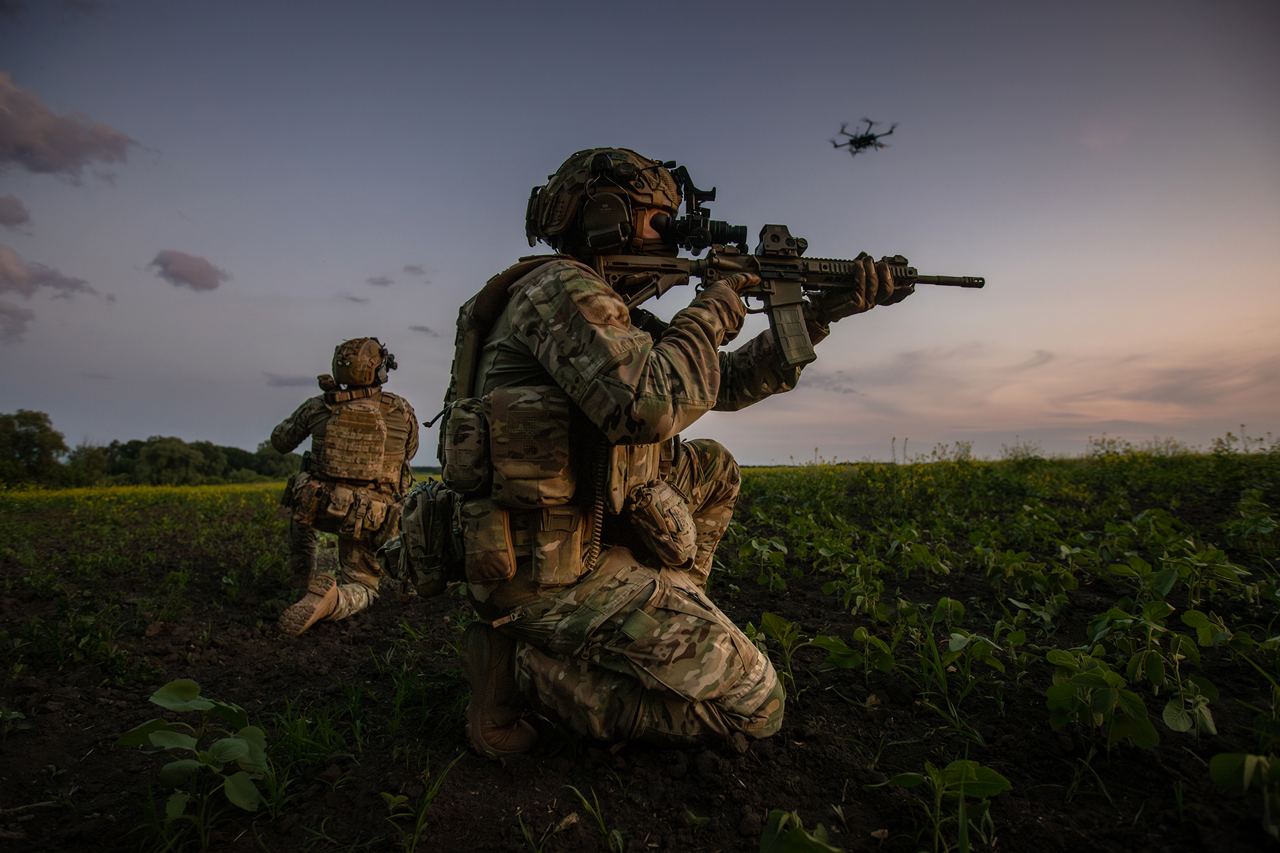
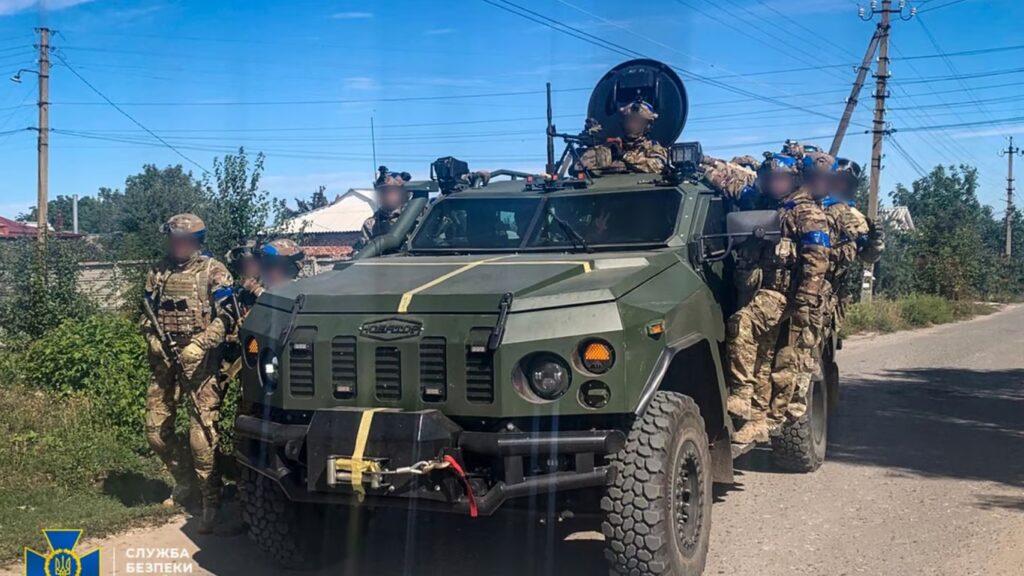
Photo credit: Security Service of Ukraine
By Nataliia Nikitina, MilTech Advisor – Trident Group Ukraine LLC
As defense analysts assessing peer level air campaigns—from the Bekaa Valley to Allied Force and modern AirSea Battle concepts—Ukraine’s counterair operations can be understood not as episodic raids, but as a meticulously orchestrated preparatory campaign. The goal: achieve durable air dominance by methodically dismantling Russia’s integrated air defense system (IADS) and its electronic warfare (EW) shield. This is a drone-age evolution of classic SEAD/DEAD doctrine, centered on EW degradation as a decisive enabler.
This analysis reframes the campaign as three concurrent, mutually reinforcing lines of effort—not sequential phases—that are collectively transitioning Ukraine from defensive denial toward offensive air dominance. EW destruction is not a supporting line of effort; it is a central enabler, because Russian EW is the connective tissue holding the IADS architecture together. However, as the campaign’s own evidence demonstrates, EW degradation operates alongside—and is sometimes circumvented by—other modes of deep strike, particularly covert infiltration. The thesis is not that EW degradation is the sole pathway to deep strike, but that it is the prerequisite for sustained, scalable operations across the full depth of the theater.
Line of Effort 1: Systematic Layer-by-Layer IADS Degradation (2025–Ongoing)
Ukraine is executing a textbook sequential SEAD/DEAD campaign that mirrors the targeting logic of Israel’s 1982 Operation Mole Cricket 19—but adapted for asymmetric execution with attributable drones, SOF/SBU covert teams, and precision munitions over a multi-year timeline.
A critical distinction: Mole Cricket 19 achieved air superiority in hours against a geographically confined, Syrian-operated IADS in Lebanon’s Bekaa Valley. Ukraine’s campaign operates against a vastly more distributed Russian IADS spanning thousands of kilometers, defended by a nuclear-armed adversary with strategic depth. The targeting logic is parallel; the operational model is fundamentally different—sustained attrition rather than decisive shock. Moreover, Russia has studied the survivability lessons from NATO’s 1999 Allied Force campaign over Serbia, where mobile SAM operators dispersed and concealed effectively, and employs analogous tactics—relocating systems, using decoys, and operating from civilian infrastructure—complicating Ukraine’s targeting significantly relative to the fixed, concentrated Syrian IADS of 1982.
Targeting Logic
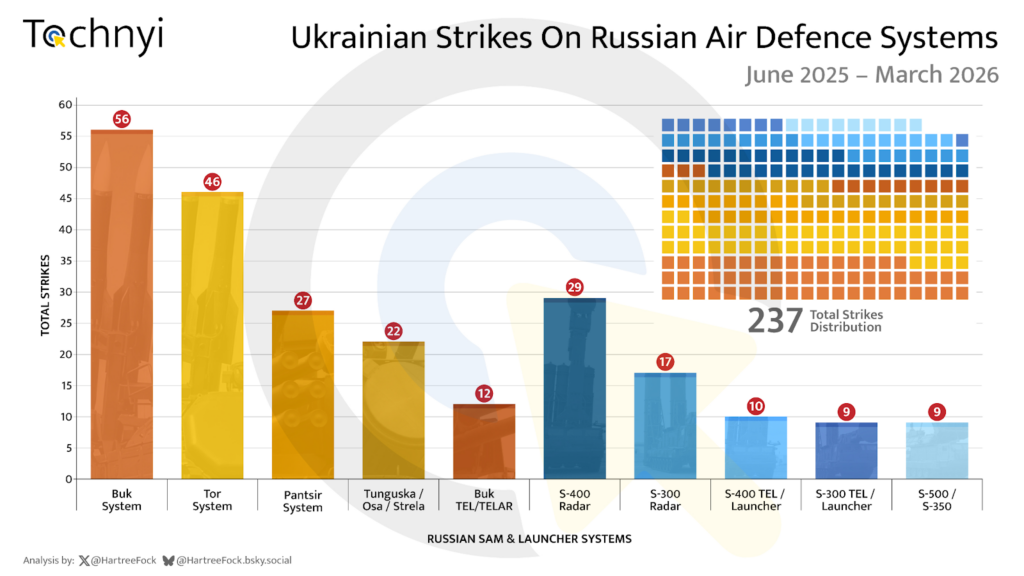
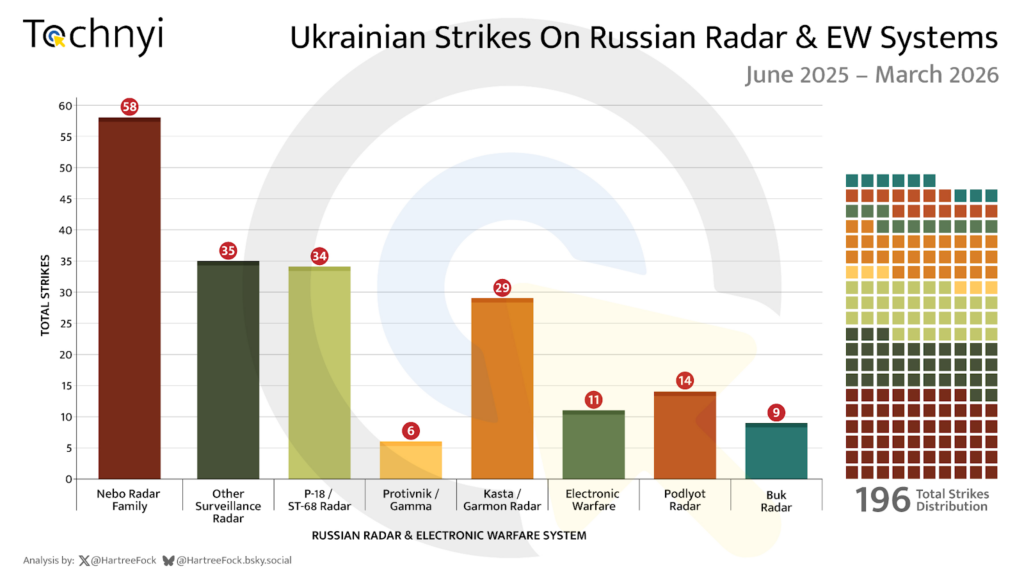
The sequence follows doctrinal SEAD principles: first launchers (forcing radar emission and depleting interceptor stocks), then radars (blinding the system’s integration), then repair infrastructure and EW nodes (preventing reconstitution). The Tochnyi collective—an open-source intelligence database maintained by a network of volunteer analysts who cross-reference Ukrainian military claims, satellite imagery, and geolocated video evidence—has catalogued over 1,530 strikes, identifying 492 confirmed hits on air defense infrastructure from June 2025 through early March 2026, with radars and EW systems comprising the largest share. As with all OSINT databases, Tochnyi likely undercounts strikes that are not visually documented and may include some claims that rely on official statements without full independent verification; the figures should be treated as indicative rather than exhaustive.
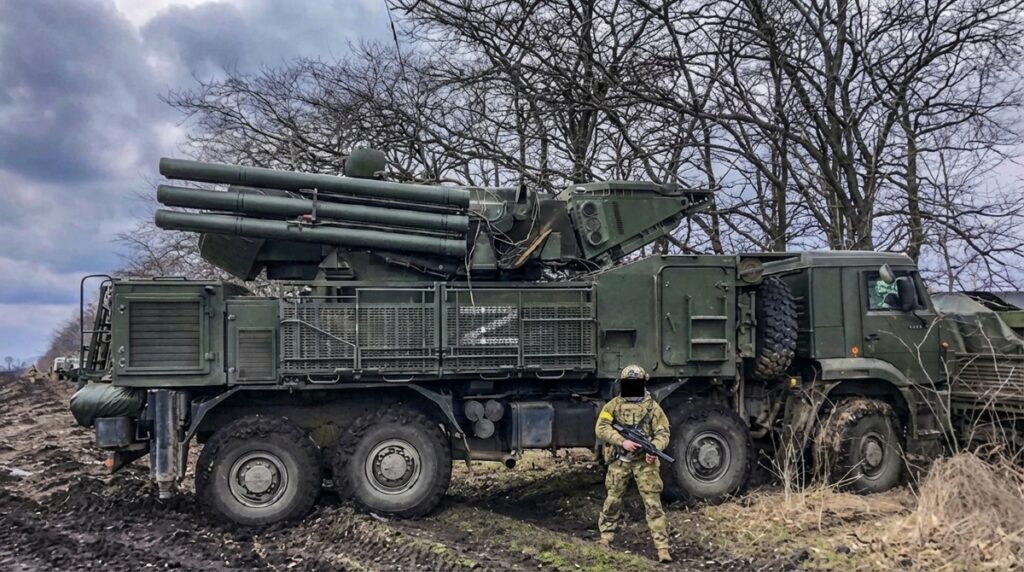
Between 1 and 15 March 2026 alone, Ukrainian forces struck over 20 Russian air defense targets across Crimea, Kherson, Luhansk, and Zaporizhzhia oblasts. The systems hit span Russia’s full layered architecture: S-400, S-300, S-300V, Buk-M3, Buk-M1, Tor, and Pantsir-S1 launchers—from long-range strategic interceptors down to short-range point defense—plus eight radar types including the Nebo-U early-warning system and Sopka-2 coastal surveillance radar.
EW as the Critical Vulnerability
Russian EW systems—the R-330Zh Zhitel, Krasukha-4, Borysoglebsk-2, Pole-21, and newer systems like the Sapphire—are not merely jammers. They perform three interlocking functions: they shield SAM radars from drone detection and targeting; they disrupt Ukrainian drone communications and GPS guidance at tactical depth; and they enable Russian front-line operations by degrading Ukrainian precision munitions. Destroying them creates a cascading effect: with EW degraded, Ukrainian drones can fly farther, detect targets more clearly, and strike deeper—which enables further strikes on the radars and SAM launchers the EW systems were designed to protect.
The scope of documented EW destruction is significant. Open-source tracking by Oryx confirms at least 23 R-330Zh Zhitel systems were destroyed since 2022, each valued at approximately $10 million. The 413th Raid Battalion of Ukraine’s Unmanned Systems Forces alone has claimed over 20 EW kills, including Borysoglebsk, Zhitel, and Krasukha-4 systems. In March 2026, the Unmanned Systems Forces confirmed a strike disabling a Zhitel station near Balochky in Zaporizhzhia Oblast, approximately 30 kilometers from the front line. The SBU’s Alpha Special Operations Center conducted a sustained campaign throughout 2025 that also targeted the radar backbone: Nebo-U and Nebo-M long-range radars, Podlet, Niobiy, Kasta-2E2, Gamma-D, and Protivnik-GE systems, plus engagement radars integrated into Buk, S-300, and S-400 complexes.
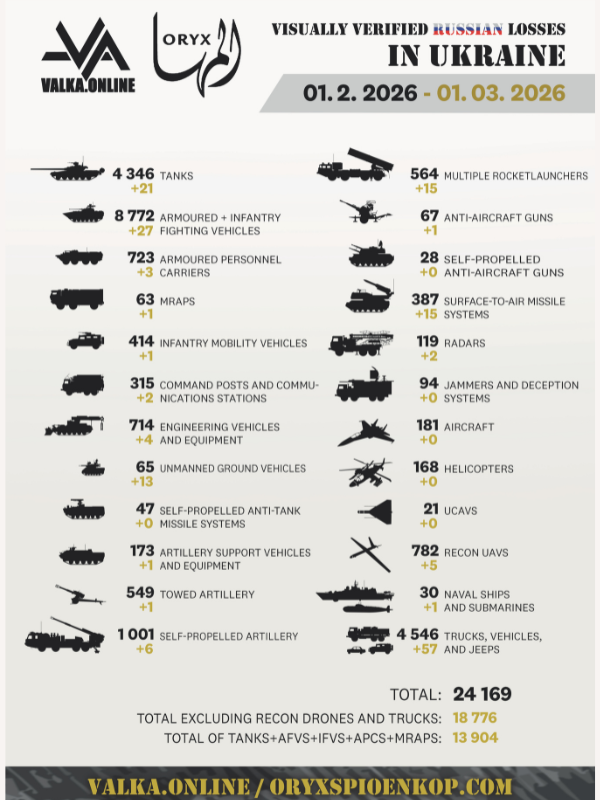
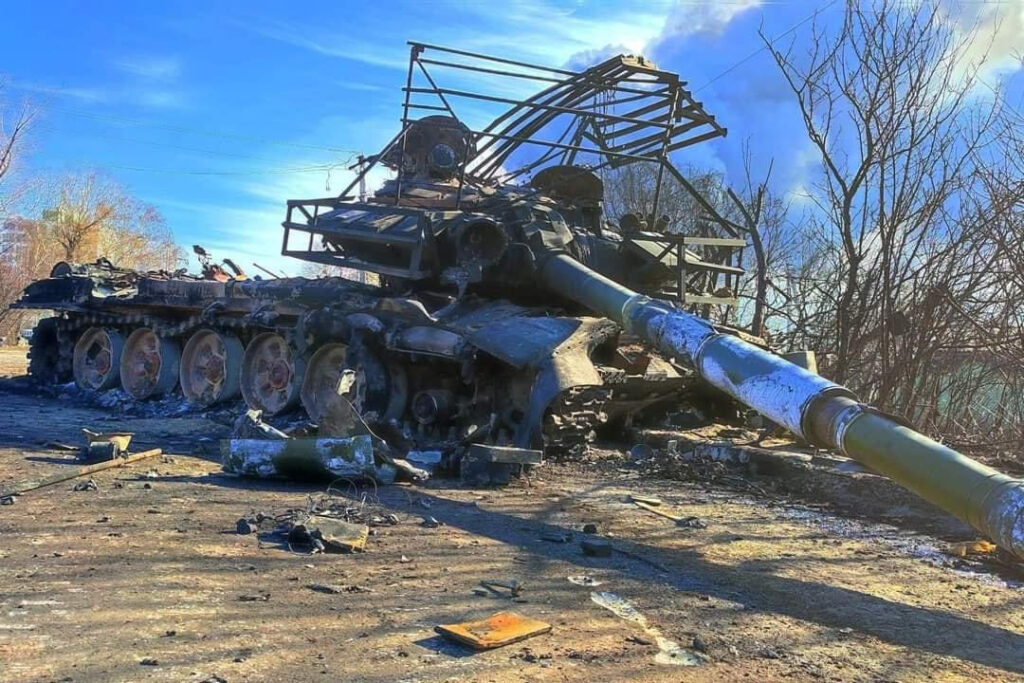
The cumulative effect: each destroyed radar, launcher, or EW node does not collapse the system on its own but incrementally reduces the system’s integration and effectiveness. Corridors emerge through which Ukrainian long-range drones and missiles can penetrate deeper into Russian territory to reach critical targets—military logistics hubs, oil refineries, weapons factories, and airfields.
Industrial Attrition Calculus
Monthly strikes scaled from approximately one confirmed hit in July 2025 to a peak of seven in November 2025, then stabilized at four to six per month through February 2026. This is not a surge campaign designed for rapid effect and then pause—it is a sustained attrition effort calibrated to outpace Russia’s repair and replacement capacity.
Russia’s reconstitution limits are becoming acute. The Kiel Institute estimates approximately 14 air defense systems produced per month across all types—a figure that encompasses everything from short-range Tor and Pantsir to long-range S-400. This aggregate number is likely dominated by lower-tier systems; strategic S-300 and S-400 production rates are considerably lower, meaning the reconstitution picture for the systems most critical to Russia’s layered IADS is substantially worse than the headline figure suggests. Deliveries of S-400 battalions slowed markedly: public tracking identified 57 battalions delivered between 2007–2018, 16 between 2019–2021, and only 10 scheduled for 2022.
Pantsir production cannot offset losses: the SBU’s Alpha unit has claimed to have destroyed or disabled what it describes as approximately half of Russia’s operational Pantsir systems during the 2025 campaign. This claim has not been independently verified—the total Russian Pantsir fleet size is itself disputed, and no OSINT database has published corroborating figures at this scale—but if even partially accurate, the losses are strategically significant. The SBU estimates total air defense damage during the 2025 campaign at approximately $4 billion. Russia has reportedly cannibalized reserves from other military districts. Separately, in September 2025, Turkish media reported that Russia had approached Turkey about repurchasing S-400 systems sold to Ankara in 2019; by December 2025, Bloomberg reported that it was Turkey’s President Erdoğan who raised the possibility of returning the systems with Putin, motivated by Ankara’s desire to rejoin the U.S. F-35 program. Both dynamics—Russian shortages and Turkish strategic recalculation—indicate the strain on Russia’s air defense industrial base, though the directionality of negotiations remains disputed.
EW platforms are even harder to replace. The Zhitel is not exported, is produced in small batches, and requires highly specialized components. Krasukha-4 systems are expensive—exact unit costs are difficult to verify, with estimates ranging from several million dollars upward—and rely on classified technology. Russia’s sanctioned economy struggles to source the high-performance antennas, ruggedized computers, and signal-processing hardware these systems require.
Measuring Operational Effect: What We Know and What We Don’t
A critical caveat: the attrition data above describes inputs—strikes delivered and systems destroyed—rather than outputs. The strongest evidence for operational effect would be measurable degradation of Russian air defense performance: expanding Ukrainian drone penetration depths, declining Russian interception rates of Ukrainian munitions, or reduced Russian sortie rates. Such data is largely unavailable in open sources, and its absence means the argument for “decisive” effect remains an inference rather than a demonstrated conclusion. Two indirect indicators suggest the attrition is having operational impact. First, Ukraine’s deep-strike campaigns against oil infrastructure, ammunition depots, and defense plants expanded significantly throughout late 2025 and early 2026—a pattern consistent with expanding operational corridors, though other factors (including improved drone technology and clandestine logistics) also contribute. Second, Russia’s post-Spiderweb dispersal of strategic bombers and diversion of air-defense assets rearward suggest Moscow perceives the threat environment as degraded. But these are circumstantial indicators, not proof of systemic IADS failure. The honest assessment: Ukraine’s preparatory campaign is imposing real costs and creating operational opportunities, but whether it has crossed the threshold from attrition to systemic degradation is not yet demonstrable from open-source evidence.
Line of Effort 2: Deep-Strike Proof of Concept
Operation Spiderweb (1 June 2025) demonstrated what becomes possible once a combination of preparatory degradation and operational ingenuity creates deep-strike opportunities—though the operation’s execution model complicates any simple attribution to IADS corridor creation.
The SBU coordinated 117 FPV drones across five time zones, striking five Russian airbases—Olenya, Dyagilevo, Ivanovo Severny, Belaya (4,300 km from Ukraine), and Ukrainka. The drones were smuggled into Russia over 18 months of clandestine preparation, concealed in purpose-built wooden containers on trucks, and piloted individually by operators in Ukraine via internet and cellular links. ArduPilot open-source autopilot software provided waypoint-based autonomous navigation as a fallback mode when operator signals were lost.
Damage Estimates
Damage estimates vary significantly by source – a point any credible analysis must acknowledge. Ukrainian officials claimed 41 aircraft hit, including a third of Russia’s strategic cruise-missile carriers, with $7 billion in total damage. Two U.S. officials speaking to Reuters reported approximately 20 aircraft hit, of which 10 were destroyed. Janes’s independent OSINT assessment, based on satellite imagery from Umbra and Capella Space, confirmed five aircraft destroyed (four Tu-95s and one An-12). The truth likely falls between the Ukrainian and U.S. figures, but even the most conservative estimate represents significant losses in irreplaceable assets: Tu-95MS, Tu-22M3, and A-50 aircraft that are no longer in production.
Relationship to EW Degradation: An Honest Assessment
Spiderweb’s relationship to the preparatory EW/AD degradation campaign requires careful analysis, because it simultaneously supports and complicates the article’s central thesis.
The operation’s primary success vector was covert infiltration, not corridor exploitation. By launching drones from within Russian territory, within kilometers of the targets, the SBU bypassed the IADS architecture entirely rather than penetrating it from Ukrainian-controlled airspace. In this sense, Spiderweb is not direct evidence that EW degradation created the operational corridors the article argues are essential—it is evidence of an alternative deep-strike pathway.
However, two connections to the broader campaign are significant. First, the SBU confirmed that some drones lost signal during flight—a consequence of Russian EW jamming—and switched to AI-assisted autonomous navigation along pre-programmed routes, with warheads automatically activated upon approaching designated targets. The Ukrainian claim that these AI systems were trained using models of Russian aircraft at Ukrainian aviation museums to identify structural weak points has not been independently verified, but the autonomous fallback capability itself is documented. This confirms that residual Russian EW capability remains a factor even for infiltration-based operations, and that the progressive degradation of that capability expands the margin for future operations. Second, the sustained post-Spiderweb expansion of deep-strike campaigns against oil infrastructure, ammunition depots, and defense plants suggests that the combination of IADS attrition and operational innovation is creating a permissive environment—neither factor alone is sufficient.
The analytical takeaway: EW degradation is best understood not as the sole enabler of deep strike, but as one of two complementary pathways. Covert infiltration (the Spiderweb model) can circumvent the IADS, while corridor creation through sustained SEAD/EW attrition enables the scalable, repeatable drone and missile campaigns that cannot rely on clandestine logistics. Both are necessary; neither is independently sufficient for sustained air dominance.
Post-Spiderweb Effects
Russia was forced to disperse its strategic bomber fleet across multiple airbases—a reactive, not preventive, response that reduces Russia’s ability to execute coordinated, large-scale air strikes. The operation also enabled a sustained expansion of deep-strike campaigns against oil infrastructure, ammunition depots, and defense plants, forcing Russia to divert air-defense assets rearward and away from the front.
Historical Parallels
Russian military bloggers themselves termed Spiderweb “our Pearl Harbor.” More analytically, the sequential logic—degrade air defenses, then exploit the gaps with deep strikes—closely mirrors the Israeli 1982 model. But the execution model is fundamentally different: cheap, attributable drones instead of manned fourth-generation fighters, covert infiltration instead of massed airpower, and distributed small-team operations instead of centralized air tasking orders. This is SEAD/DEAD doctrine adapted for asymmetric warfare.
Line of Effort 3: Manned Air Power Integration and Expansion
This line of effort runs concurrently with the others—F-16s entered combat in August 2024, before Operation Spiderweb—and its effectiveness is directly shaped by the preparatory EW/AD campaign.
F-16 Combat Record: What the Data Actually Shows
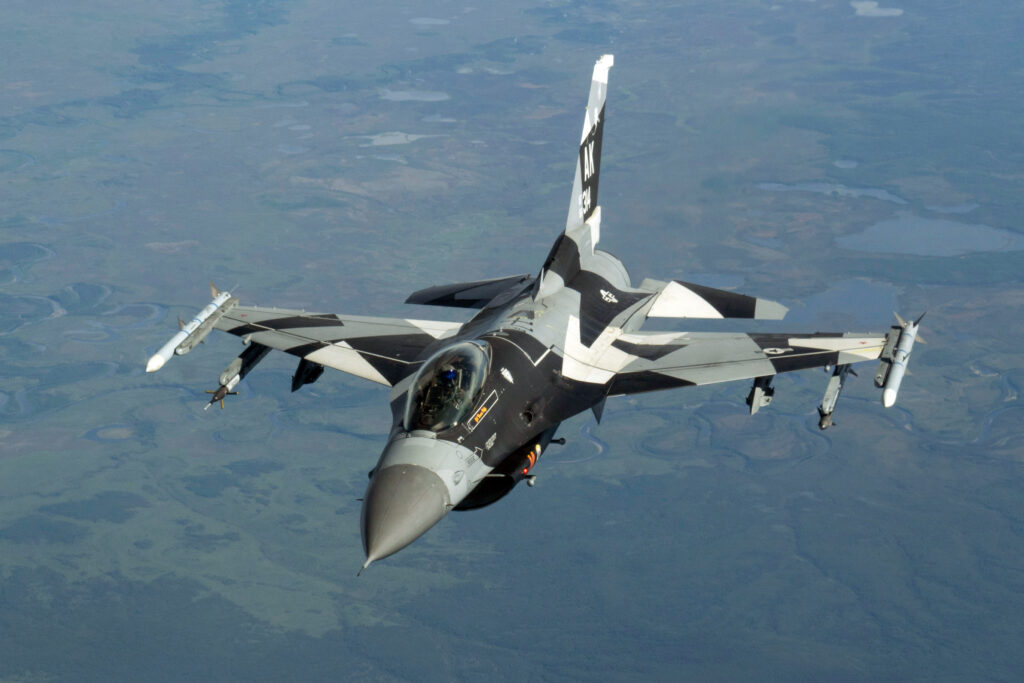
By late 2025, Ukrainian F-16s had intercepted over 1,000 aerial targets—primarily Shahed-type one-way attack drones and cruise missiles—and flown more than 1,600 ground-attack sorties. These figures require precision: the interceptions are aerial-target engagements (drones and missiles), not air-to-air kills against crewed aircraft. As of early 2026, Ukrainian officials had not claimed any confirmed F-16 engagements against Russian manned fighters. The distinction matters, because it reveals the F-16’s actual role: a mobile, flexible air-defense platform that supplements ground-based systems, rather than a classic air-superiority fighter conducting dogfights.
Ukrainian pilots have innovated tactically, departing from standard NATO doctrine. They operate primarily at low altitude, using terrain masking to defeat Russian radar detection. On at least one documented mission, a three-ship formation deliberately provoked missile launches from Russian fighters, acting as decoys to allow Ukrainian strike aircraft to hit ground targets before all aircraft returned safely. Pilots have used the M61 Vulcan cannon and APKWS laser-guided rockets—far cheaper than AIM-120 AMRAAM missiles—to engage slow, predictable drones, reflecting an improvisational approach driven by munition economics. HARM anti-radiation missile sorties continue the Wild Weasel SEAD tradition: forcing Russian SAM radars to shut down or relocate, creating short windows of localized air superiority.
Fleet Size and Losses: Honest Assessment
The total projected F-16 fleet is approximately 85 airframes once all committed deliveries are completed, including Belgium’s 30 (postponed to 2026 and beyond). As of late 2025, roughly 60 had been provided by the Netherlands, Denmark, and Norway. However, the operational fleet is considerably smaller. The gap between delivered and operationally available aircraft reflects maintenance requirements, combat attrition, and pilot availability—a dynamic common to any air force operating under wartime conditions, but one that substantially constrains Ukraine’s effective combat air power at any given time.
Declared losses stand at four aircraft and three pilots as of late 2025. Not all losses are confirmed as ground-based air defense (GBAD) kills; at least one crash occurred during a massive Russian aerial assault where the precise cause of damage was not publicly specified. These losses underscore why the preparatory EW/AD campaign remains essential: even with corridors opening, residual Russian GBAD retains the ability to impose costs on manned aviation.
Interception Rates: The Full Picture
Ukraine’s air-defense interception rate in March 2026 recovered to just under 90%, following a significant decline from 96.58% in January 2025 through most of 2025, when rates remained in the 80s. The decline had multiple causes: Russian drones became more sophisticated with better guidance and EW resistance; Russia gained better understanding of Ukrainian air-defense positioning; and the sheer volume of Russian attacks escalated dramatically—according to Ukrainian Air Force reporting, March 2026 saw a record 6,462 one-way attack drones launched, a figure that, if accurate, exceeds the total between September 2022 and July 2024.
This context actually strengthens the case for EW degradation’s importance: Ukraine’s interception rate recovered despite vastly increased attack volumes, suggesting that the preparatory campaign against Russian EW and radar infrastructure is expanding the defensive operating envelope even as Russia scales its offensive.
Future Trajectory
The Mirage 2000-5F (at least six airframes operational since February 2025) complements the F-16 in the air-defense role. For the longer term, Zelenskyy announced in February 2026 that Ukraine has signed letters of intent for 150 Saab Gripen E/F fighters (October 2025, in Sweden) and up to 100 Dassault Rafale F4 jets (November 2025, with France). These are non-binding memorandums of intent, not contracts, and any credible assessment must note the significant feasibility challenges: the combined procurement cost exceeds €50 billion, with lifecycle costs potentially reaching €100 billion over 40 years; Ukraine faces a $60 billion budget gap for 2026–27 and would depend on EU funding mechanisms and frozen Russian asset proceeds that have not yet been agreed; Saab currently produces approximately 12 Gripens per year (with plans to scale to 36 through international co-production), while Dassault produced 26 Rafales in 2025 with a 220-aircraft backlog; and full delivery would take 10–15 years. The memorandums represent a long-term fleet vision, but they are aspirational declarations, not actionable procurement timelines.
Link-16 integration is tightening the kill web between Western-provided aircraft and ground-based systems. Each of these capabilities becomes more effective precisely because the preparatory EW/AD attrition campaign is progressively degrading the threat environment.
Strategic Logic: The Attritional Architecture
The overarching strategic logic is not a short-term tactical fix but a multi-year attritional architecture calibrated to Russian production realities.
By sustaining four to six high-value SEAD strikes monthly, Ukraine forces Moscow into a compounding dilemma: divert scarce SAMs and EW systems to protect rear-area infrastructure or accept deeper strikes on strategically vital targets. Cannibalizing reserves from distant military districts and the reported S-400 negotiations with Turkey indicate that reconstitution is struggling to keep pace with attrition—though the absence of comprehensive output metrics means the degree of systemic degradation remains uncertain. The economic multiplier is substantial: the SBU estimates $4 billion in air-defense damage during 2025 alone, plus irreplaceable bomber losses from Spiderweb.
Historical Parallels: Refined
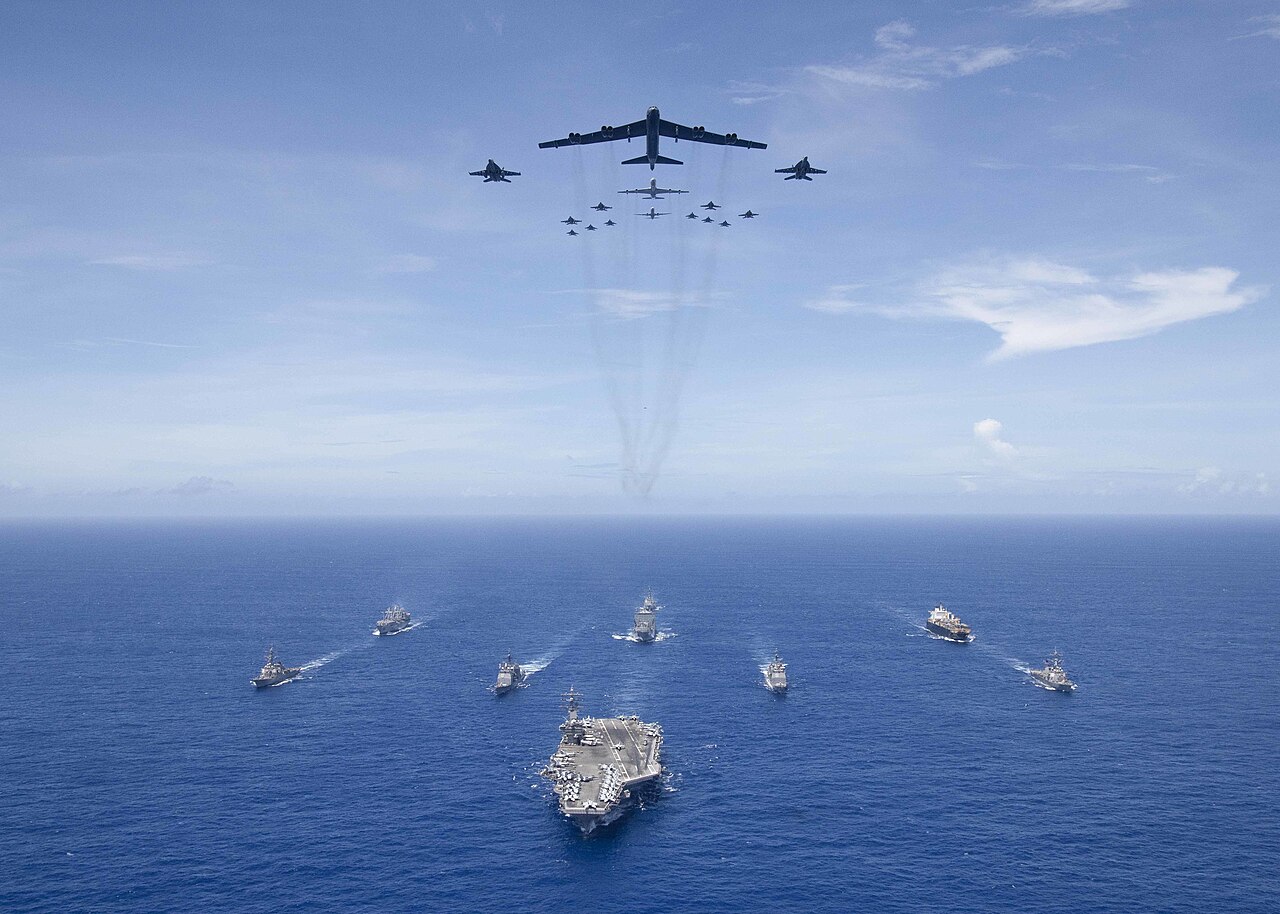
The Bekaa Valley 1982 model provides the sequential targeting logic—launchers, then radars, then C2—that Ukraine follows. But Israel achieved this against a single, geographically concentrated IADS in a matter of hours. Ukraine is applying the same doctrinal logic over years, against a distributed continental-scale IADS, using cheap drones instead of F-16s. The logic is the same; the execution model is entirely different.
NATO’s 1999 Serbia campaign illustrates the mobility-and-concealment challenge Russia has absorbed and employed. Ukraine counters not with overwhelming stealth airpower (which it lacks) but with persistent multi-domain pressure: drones plus SOF plus satellite ISR plus HUMINT, maintaining continuous targeting pressure rather than discrete sorties.
The U.S. AirSea Battle concept—industrial targeting of C2, sensors, and logistics to degrade an adversary’s power-projection capacity—describes precisely what Ukraine is executing, but with attributable systems at a fraction of the cost envisioned in the original Pacific theater concept.
Ukraine’s SEAD campaign also represents what several analysts have flagged as a live test-case being studied by multiple state actors. The U.S. Department of Defense’s 2025 China Military Power Report notes that Beijing “has drawn lessons from the Russia-Ukraine war that are relevant to a Taiwan conflict scenario, including operational concepts, the need for modern weapon systems, and the danger of” extended conflict. AEI and ISW’s Coalition Defense of Taiwan project has documented PLA observation of the war, including the deployment of officers near the Russian front lines. Multiple analysts assess that the PLA is likely studying Ukraine’s SEAD innovations—particularly the use of attributable drones for air-defense suppression—for potential application against Taiwan’s layered air defenses, including its Patriot PAC-3 and indigenous Tien Kung systems. This remains an analytical inference, not a confirmed intelligence finding, but the implications extend the campaign’s significance well beyond this theater.
Risks and Counters
Russia adapts continuously: fiber-optic guided drones immune to EW jamming; dispersed and mobile SAM deployment; complex strike packages combining decoys, drones, cruise missiles, and ballistic missiles to saturate defenses; and gradual reconstitution through wartime industrial mobilization.
Ukraine must sustain Western munition flows (HARM, ATACMS, Storm Shadow, AASM Hammer), scale domestic long-range drone production (with targets of seven million drones in 2026), and close the gap in mid-range strike capabilities that Ukrainian commanders have identified as underfunded. A key tension: whether Ukraine’s Storm Shadow and ATACMS stocks—estimated at fewer than 400 combined—are sufficient to sustain the campaign tempo needed to prevent Russian IADS reconstitution through mid-2026 without further Western transfers.
Political will in the West remains the true center of gravity. The preparatory campaign’s success is ultimately a function of sustained allied support.
Conclusion
Ukraine’s preparatory campaign is not merely defensive—it is the foundational architecture for future offensive air dominance. By methodically degrading the EW shield and exploiting complementary deep-strike pathways—corridor creation through SEAD attrition and covert infiltration through clandestine logistics—Kyiv is systematically unmaking Russia’s ability to contest the skies. The transition to manned, networked, precision air power becomes possible precisely because the preparatory attrition has already opened corridors, degraded Russia’s situational awareness, and imposed unsustainable reconstitution costs.
The honest caveat: whether that attrition has already crossed from costly nuisance to systemic IADS degradation cannot yet be demonstrated from open-source evidence. The campaign’s ultimate verdict depends on sustained Western support, continued Ukrainian innovation, and whether Russia’s industrial mobilization can outpace the losses being inflicted.
This is modern warfare at its most sophisticated: asymmetric, patient, and—if sustained—potentially decisive.
Sources & Analytical References
Primary Intelligence & Analytical Sources
- Tochnyi Report — “Blinding the Bear and Pulling Its Fangs: Ukraine’s Long-Range Campaign Against Russian Air Defence”
- Oryx — “Attack on Europe: Documenting Russian Equipment Losses During the Russian Invasion of Ukraine”
- Kiel Institute for the World Economy — Ukraine Support / Military Procurement Tracker
Supporting Data, Technology & Contextual Reporting
- Operation “Spider’s Web” (1 June 2025) — Analysis of Ukraine’s asymmetric strike capabilities
- MilitaryLand — SBU Alpha Special Operations Center (Alpha Group) profile
- ArduPilot — Open-source UAV autopilot systems
We remain available for further analysis, advisory engagement, or institutional cooperation.
Follow Trident Group Ukraine LLC to stay aligned with verified intelligence and security developments.
