
By Svitlana Kravchenko, Communications Director, Trident Group Ukraine
What nearly five years of war have taught me about survival, childhood, and why silence has become one of Ukraine’s greatest enemies.
In just six months, it will be five years since Russia launched its full-scale invasion of Ukraine.
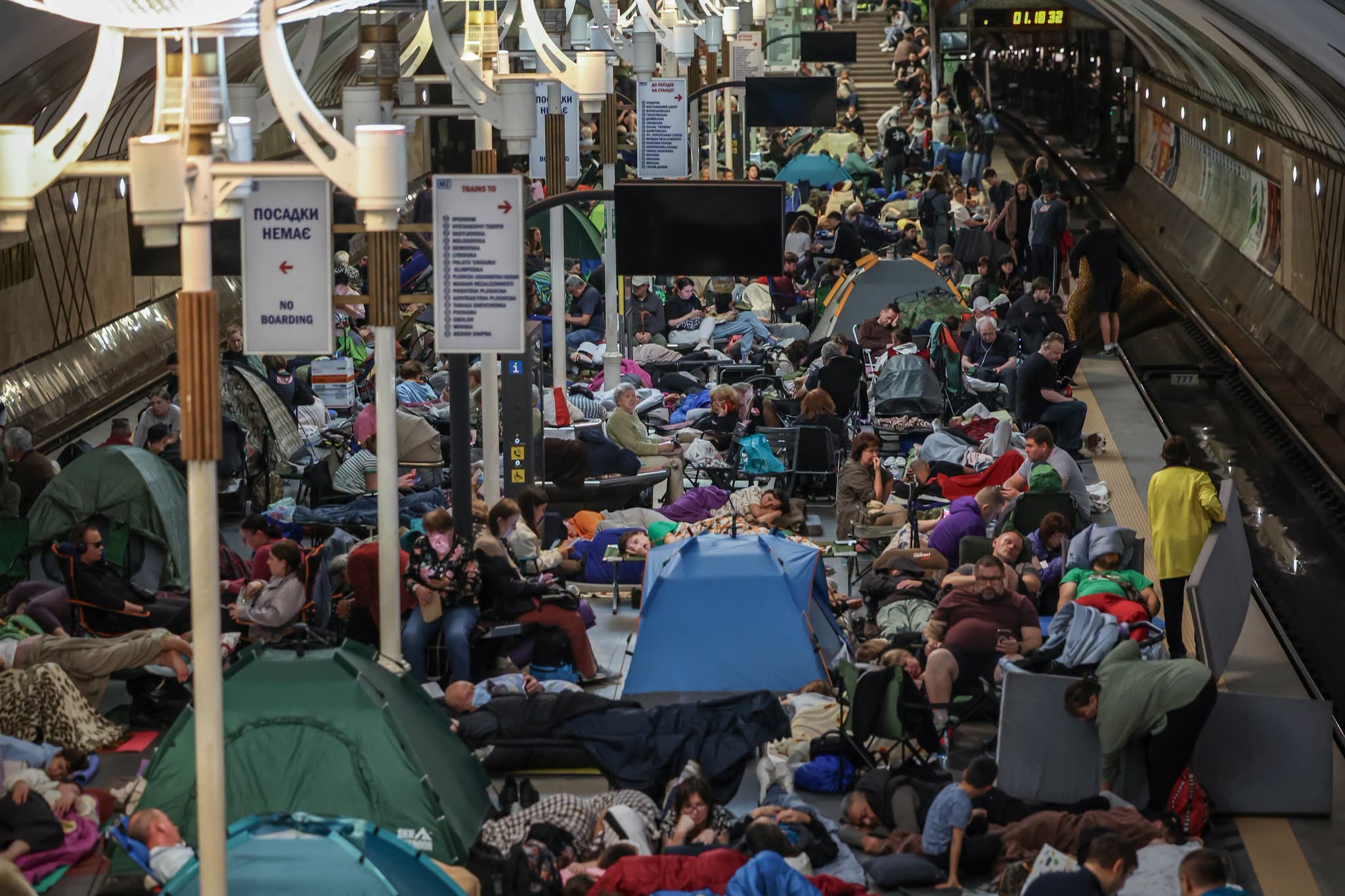
For those who have followed the war, the images are familiar: destroyed apartment buildings, air raid sirens, children sleeping in metro stations, smoke rising over cities, grieving families standing beside fresh graves.
But there is another side of this war that cameras rarely capture — the quiet heroism of ordinary people.
When the world speaks about Ukraine, one word appears again and again: resilience.
People call us resilient because our cities continue to function after nights of missile attacks. Cafés reopen in the morning. Children go to school. Businesses stay open. People continue to work, volunteer, laugh, and dream.
But there is something I wish the world understood.
We never chose to be resilient.
Resilience was not a national strategy or a cultural trait we proudly embraced. It was forced upon us.
I was born and raised in Kyiv, and most days of this war have unfolded outside my own window. Living through this reality changed not only the way I see my country, but also how I believe we should tell its story.
That conviction eventually inspired us at Trident Group Ukraine to launch The Sound of Life — a campaign built on one simple idea: behind every headline about Ukraine is a child whose safety depends not only on the courage and resilience of Ukrainians, but also on the world’s willingness to help protect them.

For almost five years, millions of Ukrainians have had no choice but to keep living under circumstances no one should ever accept as normal.
I often think about Ukrainian mothers, especially those whose husbands are defending Ukraine, while they shoulder every responsibility at home — raising children, caring for elderly relatives, working, and somehow finding the strength to keep going every single day.
The same quiet strength can be found in fathers raising children on their own.
Imagine spending the night in a basement, a metro station, or an underground parking garage because drones and missiles are targeting your city.
At dawn, after barely sleeping, you finally return home, exhausted. But the day is only beginning. You wake your children, prepare breakfast, help them get dressed, take them to school or kindergarten, and head to work yourself.
On the way home, you stop at the supermarket, cook dinner, help with homework, read a bedtime story, and kiss them goodnight. And that’s only part of the routine. Even in wartime, children still get sick, have after-school activities, need doctor’s appointments, and depend on their parents for all the countless little things that make up everyday family life. The responsibilities don’t disappear — they simply become much harder to carry.
Then, before turning off the light, you check your phone one last time — not to see tomorrow’s weather, but whether another air raid alert has already begun.
This is not resilience.
This is survival.

Visitors often arrive in Kyiv expecting to see a city at war.
Instead, they find busy cafés, crowded streets, traffic, and people smiling.
Life appears almost normal.
But that normality is fragile.
Every Ukrainian knows where the nearest shelter is.
Every family checks air alert apps before going to sleep.
Every parent calculates how quickly they can reach safety.
Children recognize the sound of ballistic missiles and drones before they learn multiplication tables.
The illusion of peace lasts only until the next explosion.
That explosion always comes.
This war is often described as a conflict over territory.
It is much more than that.
Russia is not simply trying to occupy Ukrainian land. It is trying to erase Ukrainian identity.
It destroys schools because education preserves identity.
It attacks museums because culture preserves identity.
It bombs churches because faith preserves identity.
It strikes residential neighborhoods because communities preserve identity.
And it kills children because children are Ukraine’s future.
For several winters, Russia has deliberately targeted Ukraine’s energy infrastructure, hoping to freeze millions of civilians into submission.
Hospitals.
Power stations.
Water systems.
Schools.
Apartment buildings.
Everything that allows ordinary people simply to live.
The objective has never been only military victory.
It has been to make life impossible.

Yet Ukrainians continue.
Not because we are fearless.
Not because we possess endless strength.
But because the alternative is losing the right to exist as a free nation.
That understanding changes people.
It changes how they spend their time, their energy, and their lives.
Across Ukraine, millions of ordinary citizens have become volunteers. Some raise money for the Armed Forces. Some evacuate families from frontline communities. Some rescue abandoned animals. Others rebuild destroyed homes or support children whose lives have been shattered by war.
Everyone contributes in their own way.
Because doing nothing is no longer an option.
This is what resilience really looks like — not extraordinary people, but ordinary people refusing to stand still.
People often ask how Ukrainians remain resilient.
My answer is simple.
We don’t celebrate resilience.
We dream of the day we no longer need it.
Until then, resilience must become action.
That belief inspired the creation of The Sound of Life.
Together with the Embassy of Ukraine in the United States, we launched the campaign to ensure that the world does not grow accustomed to this war and that the voices of Ukrainian children continue to be heard. I have the privilege of leading this initiative alongside my talented colleague, Nataliia Tsymbalista.
The idea for the campaign came from our CEO, Nick Iltsopoulos, whose decades of working in Ukraine convinced him that silence had become almost as dangerous as the missiles themselves. He believed we had a responsibility to act — to remind people that behind every statistic is a child with dreams, a family, and a future.
At the heart of the campaign is one simple belief: Ukrainian children must be protected. Protecting them begins long before a missile reaches its target.
We ask people everywhere to speak up, support trusted organizations helping children affected by the war, and, above all, encourage their governments to continue strengthening Ukraine’s air defense.
Because air defense is not only military assistance.
Air defense is civilian protection.
Air defense is child protection.
Every interceptor delivered to Ukraine is another missile that never reaches a home.
Another school that remains open.
Another family that stays together.
Another child who wakes up safely in their own bed.
The campaign’s symbol is an ordinary whistle. Elsewhere it is a toy. In Ukraine, it has become a lifeline — a reminder that no child should ever go to sleep preparing for the collapse of their own home.

Our goal is simple: to help bring the number of Ukrainian children killed or injured by this war to zero.
I dream of the day when Ukrainian parents once again place only teddy bears beside their children’s beds.
Not whistles.
Until that day comes, none of us can afford to become accustomed to this war.
Every person can make a difference.
Talk about Ukraine.
Share the stories of its children.
Support trusted humanitarian organizations.
Encourage your elected representatives to continue providing Ukraine with the air defense that saves lives every single day.
If you want to do more, join The Sound of Life campaign. Pick up a whistle. Take a photo or record a short video. Share it using #SoundOfLifeCampaign and help ensure that the voices of Ukrainian children continue to be heard around the world.
Because after the missiles, the greatest danger is silence.
The whistle only works if someone is listening.
Please — be that person.
